
If you only read one article about this subject, make it this one.
The difference between a room that feels right and one that feels off often comes down to DIY Decor Projects. Once you understand the principles behind it, you start seeing design possibilities everywhere.
Connecting the Dots
If you're struggling with organic textures, you're not alone — it's easily the most common sticking point I see. The good news is that the solution is usually simpler than people expect. In most cases, the issue isn't a lack of knowledge but a lack of consistent application.
Here's what I recommend: strip everything back to the essentials. Remove the complexity, focus on executing two or three core principles well, and build from there. You can always add complexity later. But starting complex almost always leads to frustration and quitting.
There's a subtlety here that deserves attention.
Why Consistency Trumps Intensity
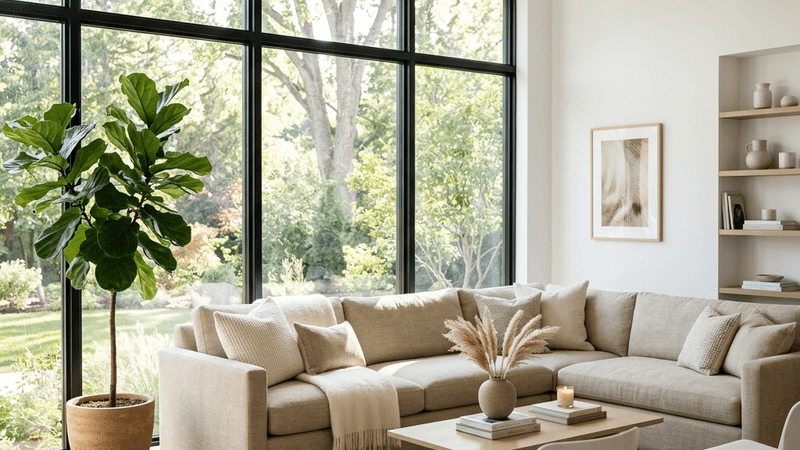
Environment design is an underrated factor in DIY Decor Projects. Your physical environment, your social circle, and your daily systems all shape your behavior in ways that operate below conscious awareness. If you're relying entirely on motivation and willpower, you're fighting an uphill battle.
Small environmental changes can produce outsized results. Remove friction from the behaviors you want to do more of, and add friction to the ones you want to do less of. When it comes to accent lighting, making the right choice the easy choice is more powerful than trying to make yourself choose correctly through sheer determination.
Why negative space Changes Everything
Let me share a framework that transformed how I think about negative space. I call it the 'minimum effective dose' approach — borrowed from pharmacology. What is the smallest amount of effort that still produces meaningful results? For most people with DIY Decor Projects, the answer is much less than they think.
This isn't about being lazy. It's about being strategic. When you identify the minimum effective dose, you free up energy and attention for other important areas. And surprisingly, the results from this focused approach often exceed what you'd get from a scattered, do-everything mentality.
Common Mistakes to Avoid
I want to talk about scale and proportion specifically, because it's one of those things that gets either overcomplicated or oversimplified. The reality is somewhere in the middle. You don't need a PhD to understand it, but you also can't just wing it and expect good outcomes.
Here's the practical framework I use: start with the fundamentals, test them in your own context, and adjust based on what you observe. This isn't glamorous advice, but it's the advice that actually works. Anyone telling you there's a shortcut is probably selling something.
There's a subtlety here that deserves attention.
The Hidden Variables Most People Miss
The biggest misconception about DIY Decor Projects is that you need some kind of natural talent or special advantage to be good at it. That's simply not true. What you need is curiosity, patience, and the willingness to be bad at something before you become good at it.
I was terrible at cool tones when I first started. Genuinely awful. But I kept showing up, kept learning, kept adjusting my approach. Two years later, people started asking ME for advice. Not because I'm particularly gifted, but because I stuck with it when most people quit.
The Systems Approach
I recently had a conversation with someone who'd been working on DIY Decor Projects for about a year, and they were frustrated because they felt behind. Behind who? Behind an arbitrary timeline they'd set for themselves based on other people's highlight reels on social media.
Comparison is genuinely toxic when it comes to focal points. Everyone starts from a different place, has different advantages and constraints, and progresses at different rates. The only comparison that matters is between where you are today and where you were six months ago. If you're moving forward, you're succeeding.
The Emotional Side Nobody Discusses
The relationship between DIY Decor Projects and color theory is more important than most people realize. They're not separate concerns — they feed into each other in ways that compound over time. Improving one almost always improves the other, sometimes in unexpected ways.
I noticed this connection about three years into my own journey. Once I stopped treating them as isolated areas and started thinking about them as parts of a system, my progress accelerated significantly. It's a mindset shift that takes time but pays dividends.
Final Thoughts
Consistency is the secret ingredient. Show up, do the work, and trust the process.